I enjoy effective meetings, we get a lot done with the right group of people focused on the right agenda. What most of us can't stand is wasting time with disorganized, pointless meetings.
After a few years of collecting my thoughts, here is my take on effective meetings.
The bottom line is, do the homework.
Meetings won’t change
Dialogue is the basic unit of work in an organization. The quality of dialogue determines how people feel about one another, how teams gather and process information, how stakeholder management is considered, how decisions are made, and the quality of those decisions.
I appreciate how AI is changing the way we work across disciplines, however, I believe meetings are one of those things that will stay same as ever.
Leading conversations, aligning people, getting buy-in for critical decisions, and solving problems as a group — these will always be foundational skills of leadership.
Specific to the discipline of Product, going by Lenny’s playbook, if the role of a Product Manager is about shaping the Product, shipping the Product, and aligning the People, how do you do those things exceptionally well without effective meetings?
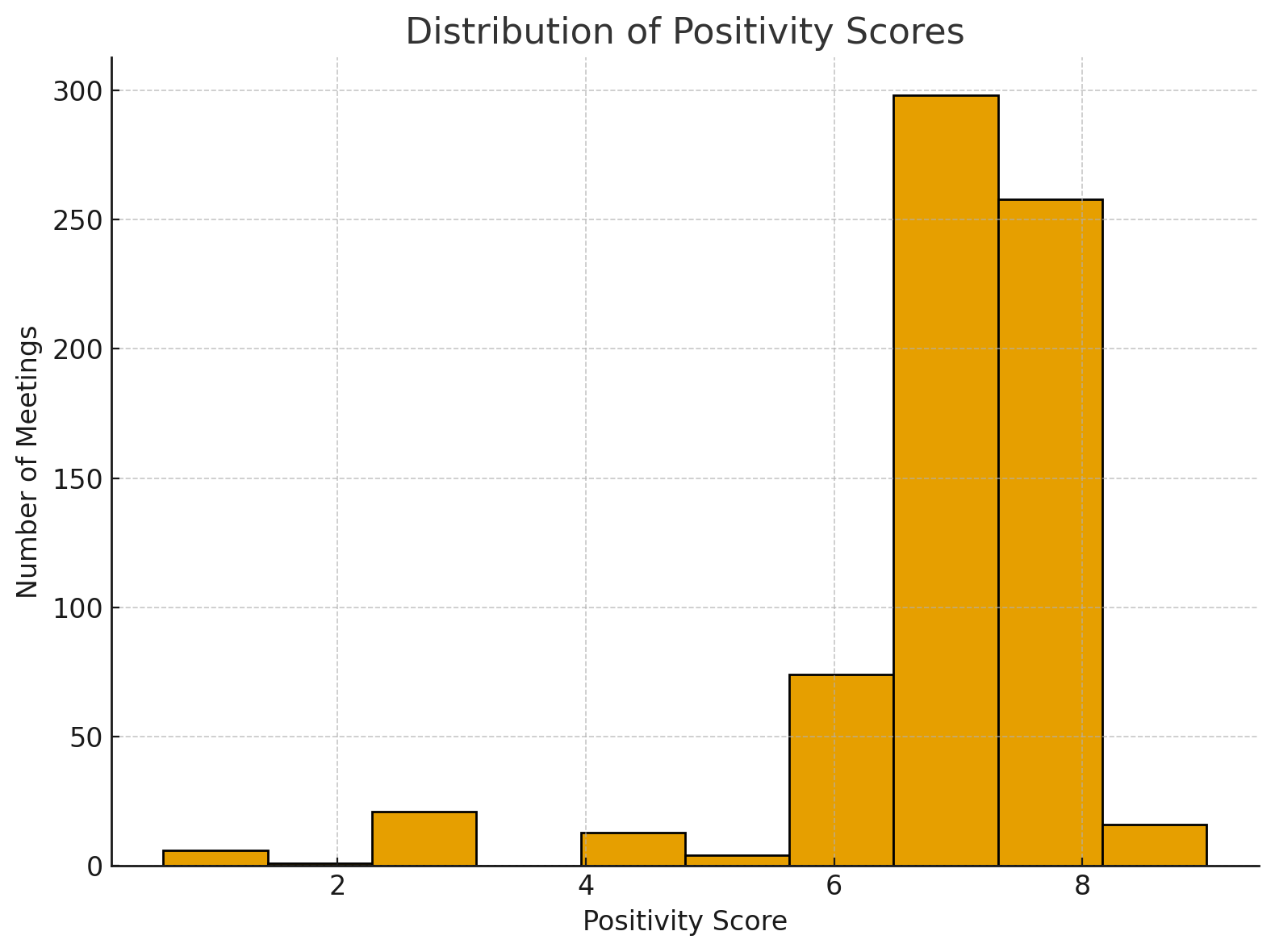
Positivity score from 600 meetings
I returned to writing about effective meetings after receiving the The Meeting Marathoner award from Money.ca, their version of “The Dundies,” and preparing for a speech I gave in Warsaw on becoming a supercommunicator.

The fun part is that I happened to be capturing metadata to gain a deeper understanding of the quality of my sessions using Circleback Insights, and the Positivity Score set the direction for what I have to contribute.
Six factors that make my meetings positive
I was puzzled, what makes my meetings so positive?
I started the soul-searching process and turned into what I do best as a Product person, I asked my customers, people I meet with often, and key stakeholders from my initiatives. Nic, our COO, took the time to distill the essence that I struggled to pinpoint alone. Once again, the best copy comes from your most engaged customers.
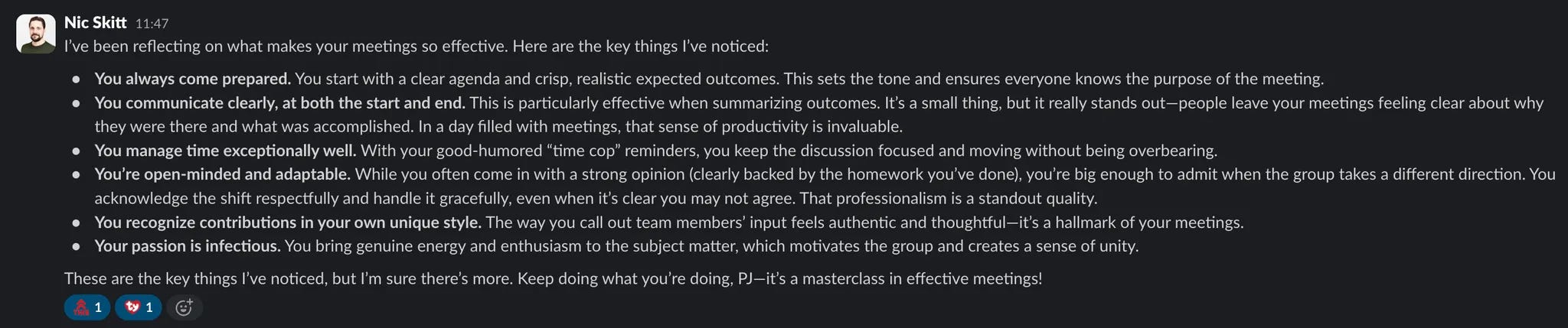
While writing this evergreen, I had the opportunity to spend a week between Santiago and Val Paraíso, and the Pacific waves helped me reflect on his feedback with additional notes for each quality he listed. However, I will keep this section for last and focus on the practical part first.
Meetings are high-value and high-cost
Naomi Gleit is one of the mentors I never spoke to, and the PJisms I bring to my teams are 100% inspired by her school of thought.
The effective meetings framework I use
I structured my meetings framework after her initial foundation, and it all starts with the question: Why exactly do I want to bring people together?
Before I get to the three types of meetings, if we look from above, this is how the meeting lifecycle generally looks like:
You feel you need to meet people for a particular reason.
You reach out, invite people, and provide them context with a pre-read.
You meet, cover the planned agenda, and take notes.
You follow up with notes and action points.
The following sections will get into more tactical details of each stage in the meeting lifecycle.
When to call a meeting?
Every communication has an objective, and in my experience, these are the three most common reasons that justify bringing people together:
Alignment: Too important to be sent via email, or when Q&A and collecting inputs from others might be a substantial portion of value added, for example, all-hands meetings and product reviews.
Decision making: Beyond what the product team can do on their own, usually because of larger dependencies or stakeholders from different areas. Here, I’m a fan of the Amazon 6-pager written narrative and the good old Product requirements document (PRD), for example, an experiment results review call for a critical rollout decision or a prioritization session.
Problem-solving: A complex problem we don’t know the best course of action for, otherwise, it would’ve been a decision-making meeting. Here, we believe that having the right minds in a room thinking from different angles will unlock stronger solutions, for example, GrowthMentor calls, ideation workshops, post-mortems, or whiteboarding with engineering.
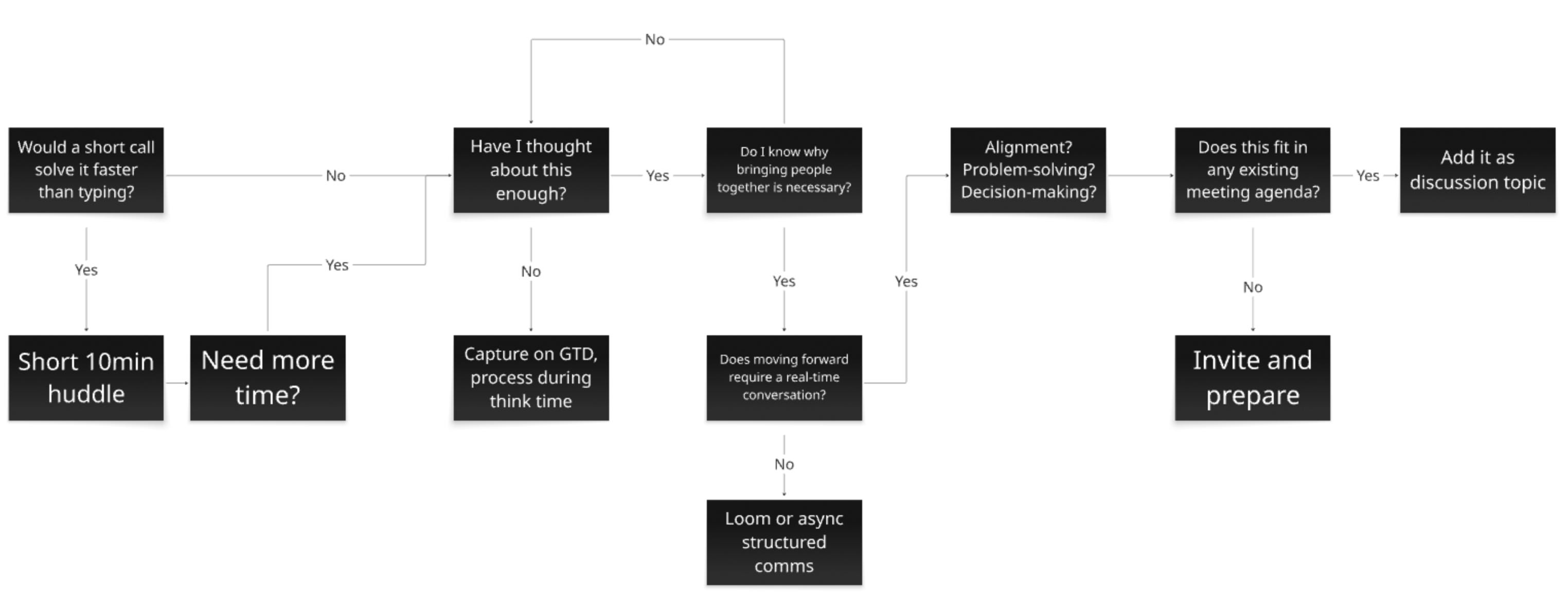
The worflow below is how my mind goes through the steps deciding if I need a watercooler ten-minutes conversation, if I could help people visualize first with an async loom, or maybe it fits an existing meeting agenda.
1. Always come prepared
An essential lesson from Kris, a VP of Marketing who coached me for half a year, that I will carry for the rest of my career, is The Five Ps:
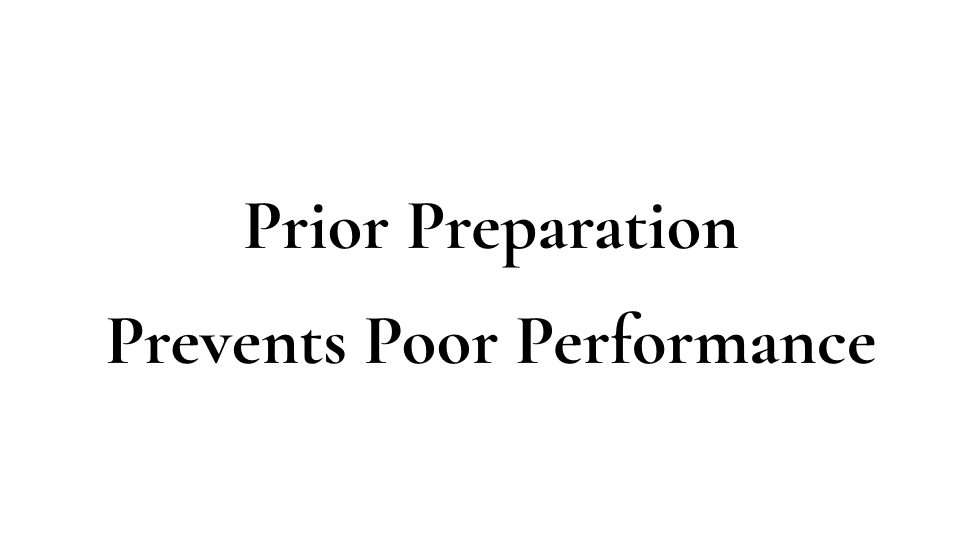
Being prepared means starting with the end in mind, it means sharing with participants an agenda of what needs to be covered and what needs to happen for us to celebrate a successful session.
“In preparation for a battle, I have always found that plans are useless, but planning is indispensable.” Above all, being prepared means respecting everyone’s time.

2. Communicate clearly, at the start and at the end
Humans tend to remember the start and the end of interactions, it's called primacy bias. Think about this, we usually remember the puzzling start of a movie and the triumphant ending. How we first met a lover and how that relationship broke. The palate-opening entrée and the sweet closing dessert.
The start and the end, when planned with intention, make any experience memorable.
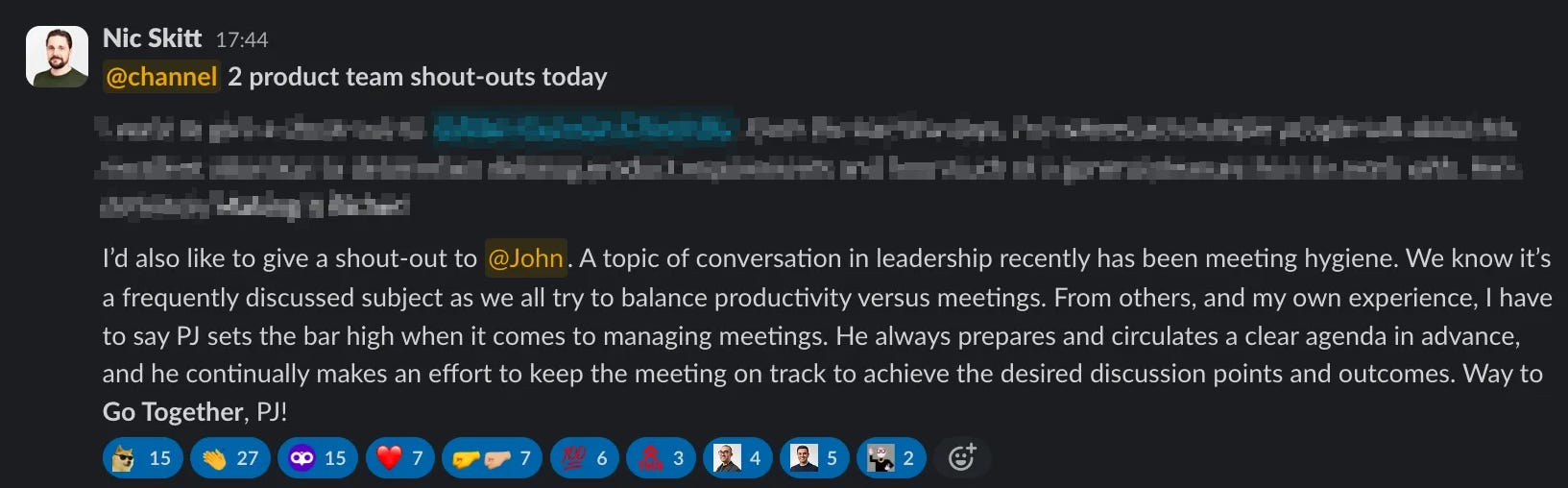
Now translate the concept to our daily communications and consider the tactical aspect:
Meetings that start lightheartedly and with smiles often get people feeling better at the end, even if they're not as productive, and that matters a lot.
Follow that with the reason why a meeting was necessary, rather than an email or a short video. Present the outline, including what needs to be covered, and explain how we expect to celebrate a successful session at the end. Show the homework and emphasize that everyone's time is valued.
At the end, remind people of what was covered, help them feel a sense of progress, and celebrate.
3. Manage time exceptionally well
Work will be endless, your time is finite, the only thing you can control is time — and energy. I often call myself the “time warrior” during meetings as I fight for discussion topics to be time-boxed. At a tactical level:
Estimate the time per item for each agenda topic. The time sum should align with the booked time slot, always with a three-minute buffer, which is often used at the beginning as participants join the call. As time per topic approaches, I call “the time warrior” and move to the next.
If a discussion needs more time, don't let the meeting run longer; people have plans and busy agendas. Park the topic and book a smaller session with stakeholders if it makes sense.
And my favorite tactic of them all, something I learned from the Wisepublishing leadership team, is to call for ELMO — Enough, Let's Move On — when a topic starts derailing, either by throwing the cute red puppet we have in the boardroom at someone while making fun of the fact, or virtually with a lovely gif.

4. Open-minded and adaptable
I attribute this to:
Have Backbone, Disagree and Commit, one of my favorite Amazon leadership principles, and
My career in experimentation humbled me countless times, as my best and brightest ideas turned out to be wrong when they reached customers in production.
5. Recognize contribution with your own style
I count in two hands the most successful product experiments in my career so far, the ones that really moved the needle and hit the bottom line, and none of those were my ideas.
Of course, with the many reps I had building and optimizing products, I helped those who were brave to speak up and share their concepts to shape and refine their vision, a process I call “increasing the likelihood for a winner.”
I expect great ideas from those I work with, and I’m the first one to stand up and celebrate their wins.

6. Passion is infectious
I love what I do, I am grateful for the opportunities I have had, I work hard, and I ensure that every meeting I participate in ends with more positive energy than it started. That's all.